• Skip to main content
  • Skip to secondary menu
  • Skip to primary sidebar

NevBlog

Neville's Digital Surrogate Brain

  • Home
  • About
  • Goals
  • Podcast
  • Timeline Viewer
  • Contact
  • Random Article

Financial

Piggy Banks Aren’t JUST for Children

April 28, 2005 by Neville

Ahh, the famous piggy bank. Call it a piggy bank, money box, change jar….whatever. The point is to put spare change from time to into this container for savings.

I think the power of the piggy bank is very underestimated. Take a look at MY piggy bank (Actually it’s a 3-year old Snapple bottle).
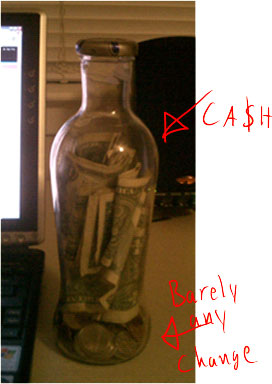
I stash away spare change AND SPARE BILLS. If I have five $1 bills, I will (without thinking) stash away two of them in the change jar. I do this all the time. I even stash $10’s and $20’s in there at times.

If you use a lot of cash or change, make a subconcious habit of putting some of it away everyday. DO NOT USE THE CHANGE JAR FOR SPENDING. This defeats the whole purpose.

Once, you’ve got a nice amount built up:

  • Go to a CoinStar or similar machine that gives you cash for change (at local grocery).
  • Get your ca$h.
  • Count all cash.
  • Deposit all cash into bank.
  • Keep 10% or 20% of the money for spending purposes (this will “reward” you for stashing money away).

Since January I will have “made” over $100 from my change jar. Not bad considering it would have just been money wasted in other places.
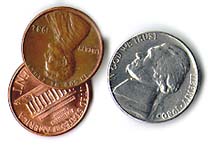
Also make sure to pickup EVERY penny, nickle, dime and quarter you see laying around. It truly adds up. I was once walking with a multi-multi-MULTI-millionaire who caught sight of a penny from the corner of his eye. Without breaking his line of conversation, he stopped, turned around, walked to the penny, picked up the penny and continued walking with me. He proceeded to carry on the conversation like nothing happened.

I understand why….it’s FREE money. No matter what economic class you are in, you’ve gotta like free money.

This has got to be the simplest form of savings possible. Do it…….NOW.

The Cost of Going Out

April 22, 2005 by Neville

Take a look at my current assets and glance at my Spending Account.


Balance: $.86 (That’s 86 CENTS)

So it looks like I will be living very frugally this weekend! I will stay away from 4th Street (Where I have been very often recently because of the Alamo Apprentice) and I will not spend on any frivolous expenses. I need to be careful of making it to Downtown this weekend:

The Downtown area of Austin has a few primary attractions:

  • 6th Street – Cheap drinks, lots of live music and tons of college students. Austin is the Live Music Capitol of the US. On weekdays regular drinks are generally in the $1 range, very cheap. Weekends the price goes up to at least $2.00 specials and an average of $3.50-$6.00 for anything else. 6th Street is blocked off at nights due to the mass amount of people that walk through (It’s like a mini Bourbon Street). Lots of small food vendors on 6th also. I DO NOT leave 6th without getting pizza first (and maybe a Bratwurst). It’s a strict rule.
  • 5th Street – A mixture of clubs, restaurants and nicer bars. Priced between 4th and 6th Streets, but leans more towards 4th Street prices.
  • 4th Street – Mainly the more affluent, 25+ crowd. The bars and clubs here are swankier and appropriate dress is required. Expect to pay $6.50 – $12.00 for a relatively common drink (Mohito, Martini etc). There are lots of very nice restaurants in this area. My record is a $150 bill for 2 people at a Hawaain Fusion restaurant. I tend to have a drooling problem on 4th because of the amazing cars.

Going Downtown with friends generally ends up being pretty expensive, especially when you pay for other people also…but it’s also terribly fun!

Luckily I am good about not exceeding my spending account (I still have $20 in cash for the weekend), but I must spend it wisely. I also need to keep at least a $50 cushion of money in the Spending Account.

I wish I was a non-drinking, anorexic vegetarian. Life would be so much cheaper :-)

Bubbles In History

April 18, 2005 by Neville

There is all sorts of talk about why the “Tech Bubble” was created then burst so suddenly. It’s really no secret, especially when looking at it in hindsight.

Bubbles happen over and over in history because the chance to make a buck is generally too appealling for the public to resist.

Bubbles have happened all through history, in every country and in various sectors of these economies. Let’s take a quick stroll through a few major bubbles over the centuries:

Tulip-Bulb Bubble of 1634

  • A non-lethal strain of virus caused some tulips to devlop stripes.
  • Enthralled with these new flowers, tulips were in high demand.
  • As more and more people watched all their friends getting rich by selling tuplip bulbs, they too saw an opportunity to get rich quick.
  • People from every walk of life starting selling the bulbs, even selling their homes to buy them.
  • With such nice high prices, everyone started selling their bulbs to extract profit. Supply now far exceeded demand and the prices fell dramatically.
  • Many small investors were highly leveraged to buy tulip bulbs, and many loans were defaulted on.
  • The small investors ended up being hurt the most.

The South Sea Bubble:

  • In 1711 The South Sea Company was formed in England.
  • Public saw enormous potential in the South Sea Company and the soaring stock price showed their sentiment.
  • All sorts of new companies went public after seeing The South Sea Company’s success on the market. All these stocks enjoyed immediate stock inflation as the public poured in money.
  • The directors of the The South Seas Company saw their stock rise from 55 to 1,000 and knew it had no relationship whatsoever to the company earnings.
  • They sold all their stock at its highest price.
  • Directors then made the announcement that the stock was not being based upon actual earnings, but public speculation.
  • The stock plummeted as people began bailing out of the stock
  • The small investors ended up being hurt the most.

Florida Real Estate Craze of the 1920’s:

  • Land bought in Miami for around $800,000 in 1923 could be subdivided and sold in 1924 for twice the price.
  • The next year, that same land could be sold for $4,000,000. With real estate red hot, the public saw an opportunity and acted.
  • One third of the Miami population had become real estate agents by this time.
  • The bubble then collapsed as there was a lack of buyers and huge supply of sellers.
  • The small investors ended up being hurt the most.

Needless to remark on, the severe stock crash of 1929 was also just a giant bubble that burst.

What I’ve noticed is the remarkably similar situation we are currently experiencing with real estate. The popularity of books like “Rich Dad, Poor Dad” which promise riches from buying old properties and selling or renting them out has encouraged everyone and their dog to become involved in real estate and become an agent.

The small investors will invariably get hurt in the end.

You cannot predict the madness of the masses, so a better lesson to take out of this is how to profit from it: Get on board early and when the masses of people start entering the sector, get ready to bail.

Obviously this is easier said than done.

Stock portFOOLio

April 13, 2005 by Neville

During and after the market hours I tend to glance at my stock prices on Yahoo Finance, but I don’t really look at my gains/losses as I am currently going very long on my stocks. The little changes no longer concern me.
Turns out Fortune Brands (FO) has been sitting in my lazy ‘ol portfolio gaining green. As of today I am at a %17.72 gain on Fortune Brands which equates to a $270 profit.

I remember Charles Kirk (TheKirkReport.com) saying, “Investors are often willing to hold onto huge losses, but sell too early when they start making huge profits”

Point is, I’m not going to sell Fortune Brands for a very long time. One thing I was proud of was my non-reaction to the news of my gains. When I first started trading my heart would beat faster while just logging in to check my stocks.

I’m beginning to think with a clearer and more rational mind than in the past. I have TheKirkReport to thank for this, I think I might drop him another donation soon!

On another note…..

I started a new business two days ago which I think can make me approximately $200-300 in extra income a month. This business will require even less work than my current online business. I will post the business on this site in about two weeks . Total business costs so far: $9.20

Being "Rich"

April 12, 2005 by Neville

Many people want to be “rich” in the future so they can do things like: Travel, buy nice cars, support family etc…who wouldn’t?

I believe “rich” means many different things to different people. Here are a few materialistic wants I feel would make me “rich” :

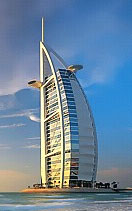
  • Being able to travel to Dubai and lodge, dine and recreate in the Hotel Burj Al Arab for a week with family and friends in a 3-bedroom suite.
  • Being able to buy a $40,000 car without really denting my disposable income.
  • Being prepared and able to buy a $300,000 home in cash.
  • Have enough disposable income to comfortably shop at Nordstrom and other higher-end retailers with a personal shopper.
  • Be financially prepared for all the unexpected expenses life throws my way.
  • Eat Ramen Noodles when I know I can easily afford a 5-star meal.

I’ll share a joke:

“The American Dream is a German Car an Italian wardrobe and a Swiss bank account. “

I think the fun of becoming rich is getting there. I like a good challenge. So until I can do all of the above without breaking a financial sweat, I will be working my a$$ of to achieve it.

Alternative Funding

April 11, 2005 by Neville

An anonymous poster left a post (here) on my site which partly stated:

“….if you had a business degree, then it would possibly be easier for you to obtain financing to finance your entreprenuerial dreams.”

Perhaps a guy in a suit who lives at the bank from 9am-5pm might think a simple business degree makes me a better entrepreur, but there is a way around this. Here are a few of the people I have met who have become extremely successful without the initial help of a bank:

  • James Flores – CoFounder of Ocean Energy – He started his oil/gas exploration company when he had no money. He borrowed from family friends and maxed out close to 30 credit cards totalling over $120,000 at 26% interest.
  • Robert Sek – Started an internet company with a relatively small investment. Rapidly grew his company and used the profits to invest in larger ventures.
  • Tim League – Founder of Alamo Drafthouse chain of movie theater/resturants. Needed several hundred thousand dollars to convert a parking structure into a movie theater. He used his $50,000 of savings, his wife convinced her parents to re-finance their house, they got a small-business federal loan (which almost anyone can get) and they maxed out 26 different credit cards.
  • Family Friend 1 – Built up small savings from working, then started buying/selling condos. From there he has moved onto multi-million dollar commercial properties and full apartment complex’s.
  • Family Friend 2 – Was working an everyday job when he landed a small government contract for an environmental cleanup. Reinvested profits and the business grew into a multi-national environmental cleanup corporation with operations in almost every state in the U.S.
  • Family Friend 3 – Worked an engineering job for many years, intelligently saved his money and bought his first piece of commercial property. He now owns a highly successful real estate company.

As you can see, the bank did not play a crucial role in the beginning of these lives. In a case such as Tim League’s, I think his borrowing methods actually drove him harder to succeed. If he didn’t succeed, he would have lost his family money, lost his savings and absolutely obliterated his credit score.

So even if a business degree can make you more qualified for a loan, there are always ways around it.

Nordstrom Return Policy Purchase

April 2, 2005 by Neville

Went to Nordstrom to pick up a pair of shorts and some new sandals for summer. Nordstrom is VERY pricey, but if you are looking for a few nice items for longterm use, I suggest buying from them for a few reasons:

1.) Service. Nordstrom’s legendary customer service has never failed to meet and beat my expectations.

2.) Return Policy. There is none. There is no time limit or reason for return needed to return an item. You can take a beaten up, dog-eaten pair of 10 year old jeans purchased from them and get a refund or exchange. Seriously.

Now, just remember, don’t buy EVERYTHING from them, just a select few high quality items from your wardrobe.

My excursion to Nordstrom cost me:

  • J.W. Nordstrom Khaki Shorts – $32.50
  • Cole Haan Leather Sandals – $145
  • Shoe shining stuff – $6
  • Tax – $15.14
  • Total – $198.64

Eat your heart out Budgeting Babe :)

Tax Refund

March 29, 2005 by Neville

I’m no “Taxamatician” (yes, that was a joke), but isn’t a tax refund simply a REFUND of money you overpaid?
This CNN article entitled 5 Ways to Spend Your Refund shows the sentiment in America to blow your refund. According to my knowledge, this is equivelant to:

Buying $5 worth of candy with a $10 bill. When the cashier hands you back $5 in change, you think, “Hey! Free money!” and go spend it.

When you overpay for your taxes and then get some of it back, you aren’t “getting” free money. If you are going to blow your tax refund, blow it on something CRAZY like paying off debt or starting a new savings account!

Stock Portfolio & Lottery

March 23, 2005 by Neville

So I am going ahead with my plan to buy $100 worth of $1 scratch-off lottery tickets to test the averages. I will take pictures and tabulate the results by the end of this week.

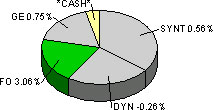
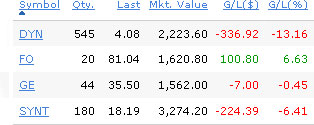
My total net worth has slipped a little as my Ameritrade portfolio has been under some stress lately. These are all longterm holdings, so no selling is in sight (except maybe Syntel). Check it out:

Dynegy (DYN) – Just a few weeks ago I went up to a nice profit from a 25% loss, but it’s all slipping back now. This stock will be held onto for approx. 5 years.

Fortune Brands (FO) – Has steadily moved between a 6% and 11% gain since I bought it. I personally idolize this company for its diverse array of subsidiaries. Check out some of their well-known brands: Fortune Brands Website.

General Electric (GE) – A pretty stable stock that I plan to keep forever. I doubt this stock will go anywhere fast, up or down. It’s meant to be the “rock” of my portfolio.

Syntel (SYNT) – They are issuing a $1.50 per share dividend on March 31st which will add up to a nice $270 infusion into my account. If the stock hits above $25 I will sell. I have made money on this stock in the past.

Over the years I have finally taught myself to remove all emotion from stocks. Whether they are up or down for the day, I don’t even flinch. As I plan to hold these for many years, small changes no longer interest me. My heart used to speed up everytime I would log in to check my sotcks, I have finally developed a thick skin!

Savings

March 11, 2005 by Neville

I am in an Asian Studies class, and we have recently been discussing savings habits in Asia. I’m not sure about the recent facts, but many Chinese families save anywhere from 30% to 50% of their income!

This article shows that most Japanese households save roughly 29% of all disposable income.

Could you for one second imagine if EVERYONE in America saved 30% of disposable income? After the economic bubble burst a few years ago, layoffs would not have hurt as much. Most people would be able to stop working for several months while they find new income streams. Many people would be able to live 6-12 months soley off of “rainy day” accounts without having to touch their longterm savings or children’s college funds.

Savings allows your money to pile up, and if you do not properly manage the urge to splurge, you will end up blowing it in all the wrong places.

I will only spend money on something if I can truly afford it. If something costs $1,000 I can obviously afford it (look to your right). BUT…Notice I do not have $1,000 in my designated spending account. Therefore, I will not buy the product even though I am capable of it.

Too many people THINK they can afford something just because they currently have the money to buy it. Wrong!

  • « Go to Previous Page
  • Go to page 1
  • Go to page 2
  • Go to page 3
  • Go to page 4
  • Go to page 5
  • Go to page 6
  • Interim pages omitted …
  • Go to page 8
  • Go to Next Page »

Primary Sidebar

Hi I'm Neville. This is my personal website. More…

Follow Along:

✏️ My Copywriting Blog
📂 My Swipe File Collection
▶️ YouTube Channel
🐦 Twitter
🌇 Instagram

Some Articles:

✏️ To-do list hack
✏️ The Lottery Experiment
✏️ Curb painting for profit
✏️ Illegal to write on money?
✏️ How to crash a party
✏️ Why Facebook Sued Me
✏️ Bottled Water Experiment
✏️ How House of Rave Works
✏️ Copywriting courses & books
✏️ Learning to backflip
✏️ Death Calculator
✏️ The purpose of life
✏️ Spray painted some shoes
✏️ Previous months goals
✏️ Have a reading party
✏️ Random article

The Archives:

  • 2025: J F M A M J J A S O N D
  • 2024: J F M A M J J A S O N D
  • 2023: J F M A M J J A S O N D
  • 2022: J F M A M J J A S O N D
  • 2021: J F M A M J J A S O N D
  • 2020: J F M A M J J A S O N D
  • 2019: J F M A M J J A S O N D
  • 2018: J F M A M J J A S O N D
  • 2017: J F M A M J J A S O N D
  • 2016: J F M A M J J A S O N D
  • 2015: J F M A M J J A S O N D
  • 2014: J F M A M J J A S O N D
  • 2013: J F M A M J J A S O N D
  • 2012: J F M A M J J A S O N D
  • 2011: J F M A M J J A S O N D
  • 2010: J F M A M J J A S O N D
  • 2009: J F M A M J J A S O N D
  • 2008: J F M A M J J A S O N D
  • 2007: J F M A M J J A S O N D
  • 2006: J F M A M J J A S O N D
  • 2005: J F M A M J J A S O N D
  • 2004: J F M A M J J A S O N D

Copyright © 2025 Neville Medhora